Living or investing in a multi-unit building in Morocco requires adhering to co-ownership legislation. Regulated under **Law No. 18-00 as amended by Law No. 106-12**, co-ownership law establishes rights and obligations regarding private areas and shared building amenities (elevators, stairwells, security, roofing, and gardens).
1. Appointment and Duties of the Building Syndic
The syndic serves as the legal representative of the homeowners' association (HOA). Elected during the **General Assembly (GA)** by vote majority, duties include:
- Core Responsibilities: Maintaining common building elements, enforcing bylaws, managing budgets, and contracting insurance.
- Volunteer vs Professional Management: The syndic can be a co-owner volunteer or a professional property management firm.
2. Calculating Co-Ownership Building Charges
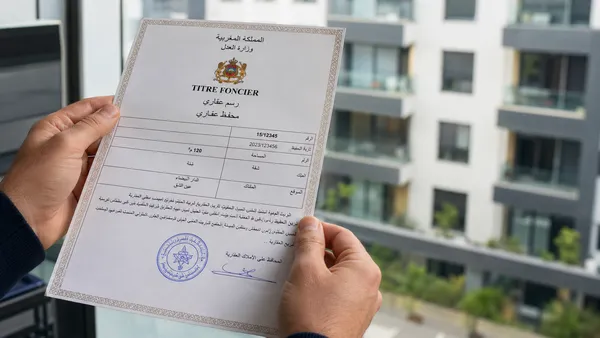
Every co-owner is legally obligated to contribute to building maintenance fees. Individual charges are calculated proportionally according to the **undivided ownership millieme (tantièmes)** recorded on the land title.
When purchasing a resale apartment, always demand a **clearance certificate from the syndic (Quitus)** confirming the seller has no unpaid building dues.
Verify land title details before committing through our Mohafadati land title check guide.
3. Debt Recovery Mechanisms for Unpaid HOA Fees
Unpaid syndic dues remain a primary challenge for building upkeep in Morocco. Law 106-12 grants syndics powerful legal recourse for debt collection:
- Formal legal notice issued via bailiff (huissier de justice).
- Filing for an **expedited court payment order** (Injonction de payer) with the Court of First Instance.
- Registering a forced judicial mortgage against the defaulting owner's property.
If preparing for your first property acquisition, consult our first-time property buyer guide for Morocco.
Find Well-Managed Properties on Sakanly
Browse listings in well-maintained residences featuring established syndic management across Morocco on Sakanly.